Team of Monkeys

Monkeys working in teams and generated as Mazes

Sunday, May 23, 2010

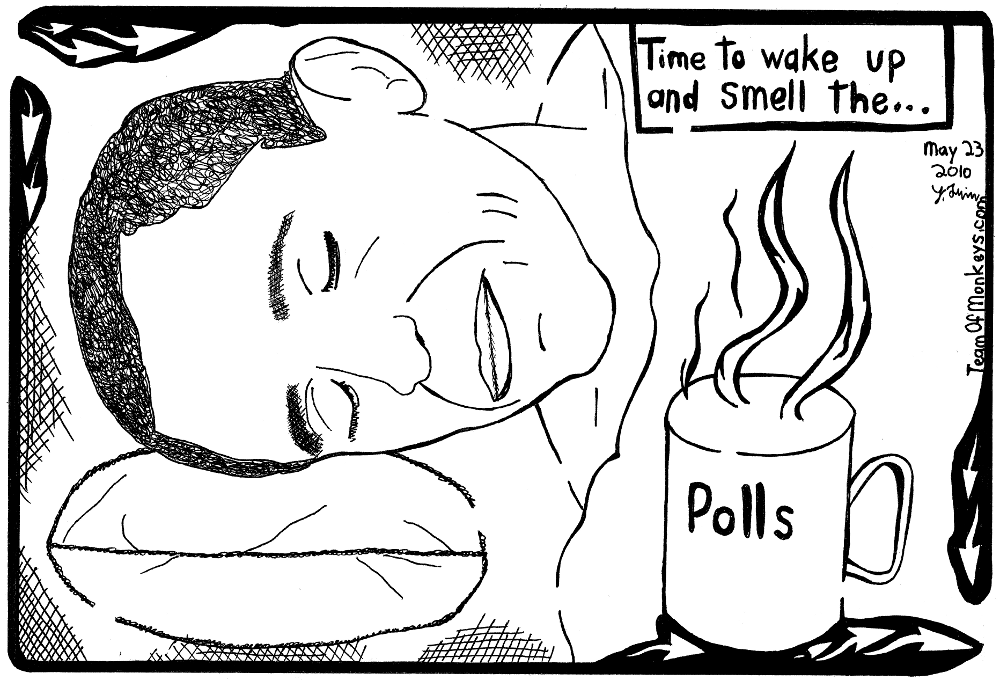
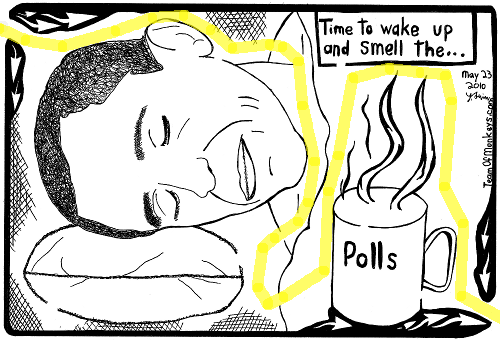
Obama needs to wake up and smell the.... By Yonatan Frimer

Maze Cartoon Obama sleeping and ignoring the polls:

Obama President Polls Maze Cartoon

Editorial cartoon maze of President Obama sleeping as a hot cup of coffee marked "Polls" is next to him and a caption that reads, "Wake up and smell the....." Created by Yonatan Frimer.
Click here for a printable, hi-res version of this maze
Click here or on the image for the solution to the maze.

More mazes by Yonatan Frimer and Maze Cartoons for you:
Political Maze Cartoon on Comics Sherpa, by Yonatan Frimer
Editorial Cartoon Mazes on Team Of Monkeys
Maze Art on Ink Blot MazesLinkBuy maze art

This maze topic in the news:

Barack Obama Sees Approval Ratings Decline After Pro-Abortion Elena Kagan


Washington, DC (LifeNews.com) -- President Barack Obama has seen has approval ratings decline in the aftermath of his selecting pro-abortion Solicitor general Elena Kagan for the open Supreme Court position. Obama's approval ratings are at one of their lowest points in the last month and heading back down to their health care-dominated levels. The Rasmussen Reports daily shows 45%...(read more)

Labels: , , , , , , , , , , , , , , , , , ,

Wednesday, March 03, 2010

Home finale for three Vols By: Wes Rucker

Home finale for three Vols By: Wes Rucker (source article)

KNOXVILLE -- What was intended to be a simple video e-mail message to the University of Tennessee turned into cut-down comedy hour.

UT senior basketball players Wayne Chism, Bobby Maze and J.P. Prince were asked merely to speak into the camera, thank students for their support this season and encourage them to attend senior night festivities before tonight's game against Arkansas.

Part of the senior night promotion includes free headbands to students, many of whom plan to wear them awkwardly high atop their heads in a tribute to Chism's self-described "yarmulke."

But the cameraman made a mistake. He didn't give the players a script.

"Come get your free headband," Chism said. "We're all going to wear one."

Tennessee's Wayne Chism (4) shoots past Florida's Alex Tyus (23) during the second half of an NCAA college basketball game Sunday, Jan. 31, 2010, in Knoxville, Tenn. Chism is a senior this year. (AP Photo/Wade Payne)

"Umm ... I'm not," Prince interrupted. "You couldn't pay me to wear one."

"Just because your head's too big," Maze responded. "We'd need a slingshot to get one on your big ol' head."

"My head's smaller than either of your nostrils," Prince shot back. "Your nasal strip would be bigger than my headband. When you sneeze, everyone in this arena gets wet."

Without blinking, Maze then wondered aloud whether students should get Prince's acne medication to go along with their Chism headbands.

Not to be outdone, Chism simply offered, "Y'all both ugly."

A normal video wouldn't have seemed appropriate, given the circuitous routes UT's seniors have taken to arrive at this point.

Chism, a four-star prospect and Pearl's first high-profile recruiting commitment to the Vols, is the only man left from the star-studded 2007 signing class. Tyler Smith, a Tennessee native who transferred to UT and became an All-Southeastern Conference forward and team captain, was on track to be honored tonight before getting dismissed from the program in January.

"I don't even know how to answer that question right now," Chism said regarding the losses of Smith and former classmates Duke Crews, Ramar Smith, Josh Tabb and Marques Johnson. "It's crazy, though. I mean, I came in with a lot of people, and through the times we've been here a lot of people have came and gone. Being the one left on senior night is kind of disappointing, but I know the guys are out there doing something better with their lives.

"They're still my brothers, and I still love and care about them."

Some left Chism's class, but others arrived, too.

Prince -- also a Tennessean -- transferred to UT in time to play three mostly successful seasons for the Vols.

Maze, a former Baltimore-area high school star, arrived last year after two seasons at Oklahoma and Hutchinson (Kan.) Community College.

"Everybody's got a story, but all that matters is that we came to Tennessee, we became a family and we won a lot of big basketball games," Maze said. "And those of us still here are going to leave with our heads held high."

Prince and Chism said they'd rather focus on Arkansas than get too caught up in senior night emotions.

"It's my last time playing here, but I don't want to make more out of it than it is right now," Prince said. "I've had some great times here, and we've won a lot of games in front of a lot of a great fans, and I'm going to miss it one day. But stuff like that won't hit me until years from now.

"I don't want to think about it too much right now, but you just want to leave the place better than when you came here, and I think we've done a good job of that. I'm proud of what we've done."

Chism opened up a little bit more than Prince.

"I kind of thought about it yesterday," Chism said. "I was like, 'Yeah, I'm just about to play my last home game.' It came pretty fast, so I was like, 'Wow.' But not excited."

After a slight nudge, the quirky big man said he's already seen the fruits of his UT labor.

"When you look back, you'd see all the orange seats were kind of empty back then, and you'd only see some people there at the games," said Chism, who has played more games than any Vol in history and is on track to graduate in May with a double major. "It was like, is it a D-II school or what? It's supposed to be a D-I school, it turned around when Coach Pearl got here -- and our first signees for him -- and then a lot of things changed from there. That gym became packed every game. Every game started being sold out because of the way Coach Pearl has turned this team around, and he's still doing it.

"I'm very proud. Back when I was in high school, people always said, 'Man, you shouldn't go to Tennessee.' Now when I go back home, everybody's a Tennessee fan."

Maze was the most openly emotional of the trio. That's not surprising, considering the point guard came to UT with a less-than-stellar reputation off the floor but is on pace to leave in May as a two-year starter who graduated and made the honor roll with a 3.5 senior-year GPA.

"This place means everything to me," Maze said. "Tennessee gave me a chance to change my identity and what people thought about me. When I was at Oklahoma, I was young and immature and got into a little bit of trouble and made some bad decisions. But since I've been here, there's been a total change. I haven't been in any off-the-court issues. I haven't been in any trouble. I'm going to graduate. I've changed my whole life around.

"I think of my two years here as a blessing; a changing point in life, a transition from a boy into a man. I will remember that my whole life."

But tonight ends the seniors' home careers only. They potentially have several more weeks to play.

"Nobody can ever take away that we beat the No. 1 and No. 2 teams in the nation my senior year ... but we're not done yet," Maze said. "I want to come back here one day and be able to show my children hopefully a picture of my team and me, and I can tell them, 'Look what I was a part of.'

"Hopefully we can earn a big banner for this place, too."

Other contacts for Wes Rucker are www.twitter.com/wesrucker and www.facebook.com/tfpvolsbeat.


Click to see some other cool mazes

Communist Maze:

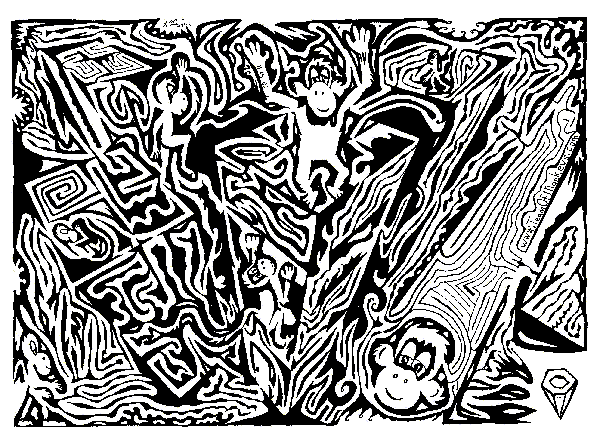
Maze of Team of Monkeys AAA - Jumper Cables

From the album:

Team Of Monkeys Jumper Cables
more mazes like these by Yonatan Frimer visit http://teamofmonkeys.com

Labels: , , , , , , , , , , , , , , , , , , ,

Friday, March 06, 2009

Mazes and News

Lost and Found in the Classroom

February 27, 2009

In 1990 I began to mediate cases for the Harvard Mediation Program; that same year I was hired to teach law and conflict resolution to undergraduates at Mount Ida College. It took me several years to realize how my experience as a mediator could enrich and improve my teaching methods in the classroom. It all came together when I began to use labyrinths and mazes as tools for teaching the mediation process.

The terms labyrinth and maze are often treated as synonyms, but there is one key difference between them: A labyrinth has only one way in and one way out; you cannot get lost or choose a wrong path. A maze has choices, various ways in and out, numerous dead ends and deceptive paths. In the Greek myth, Daedalus was commissioned to build a structure to house the deadly Minotaur (half man, half bull). The so-called “labyrinth” he constructed was actually an intricate maze, which prevented the Minotaur from finding its way out. This is why (later in the myth) Ariadne gave Theseus a long thread to help him find his way back out of the maze after slaying the Minotaur.

Share This Story

FREE Daily News Alerts

Advertisement Click here to find out more!

Labyrinths were popular in the Gothic cathedrals of the Middle Ages; the famous pavement labyrinth in the Cathedral at Chartres was designed to help people on their spiritual journeys. Pilgrims walked the winding path until they arrived at the heart of the labyrinth, a symbol of the quest for enlightenment.

I used to view teaching as a labyrinth, one way in, one way out: You came to class well prepared, gave interesting lectures, allocated time for group exercises and role-plays, assigned relevant readings and papers, and posed provocative questions for discussion. Students completed their assignments on time, came prepared to discuss the reading in class, studied diligently for exams, participated enthusiastically in group exercises, and mastered the major concepts of the course. What could be simpler?

You can stop laughing now. After a couple of semesters I realized that I couldn’t approach my courses the same way my professors had approached theirs. Students’ expectations often did not align with my own; they had different priorities, challenges and attitudes toward their work. Teaching was not, in fact, a labyrinth; it was a loopy and perplexing maze full of unexpected turns and dead ends, and I desperately needed a thread.

The thread emerged from my mediation training and practice, which, when I finally made the connection, helped me find a solution to the conflict between my students’ and my own expectations.

Mediation clients are not unlike our students: anxious, somewhat leery of the process, fearful of the unknown, hesitant to take risks. Disputing parties often expect the mediator to suggest solutions to their problems. But the first principle of mediation -- self-determination of the parties -- requires that the mediator not suggest but elicit solutions from the parties.

There are several reasons for this strategy, the most important of which is that if the solution does not come from the parties themselves, they feel less invested in their agreement and are less likely to uphold it. If a way out of their maze can be found, the parties must find it themselves, with the mediator’s guidance. In this respect, mediation is an exercise in critical and creative thinking, a form of teaching and learning.

At some point I realized that self-determination and ownership of outcomes was as important for my students as for my mediation clients. So I decided to apply this basic principle to one persistent problem I was encountering in the classroom.

I was frustrated in my Leadership Studies Seminar because students would not do the assigned reading before class. Instead of participating in a discussion of materials they had previously read, they came to class apparently expecting me to go through chapter and verse, highlighting everything they needed to know for the exam (and nothing else, thank you). Sound familiar?

I tried the usual strategies to encourage them to read the assigned pages before they came to class: in-class minute papers, group presentations, pop quizzes, study questions, penalties for lack of class participation. (I know that these tools can be helpful and even essential. They just didn’t solve this particular problem.) My students didn’t budge. I was giving myself a lot of extra grading and they still weren’t reading before they came to class. Yes, students who didn’t read the text got low grades on exams, but that didn’t improve class discussions or make me feel any better.

Clearly, as I often urged my mediation clients, I needed to approach the problem from a fresh perspective. I wanted my students to read the materials in advance so they were familiar with the issues raised in our class discussions, and not rely on me to do the reading and thinking for them. I didn’t want to spend valuable class time on pop quizzes or questions that received blank stares in return. I wanted the class to be fun and thoughtful and to get students to engage more actively. I had reached a dead end and needed to find a way out.

I settled on a plan that allowed for more choice and autonomy in how students prepared for class. In each class we would explore in depth only one or two major issues, based on short articles or passages (students chose them from a selection) we would read together at the beginning of class. However, students were responsible for all assigned readings on the syllabus, whether or not we discussed them in class. If they had questions or comments about the reading, they could bring them to class. If they had no questions, I would trust that they understood the material.

For exams, students could bring in any notes they had prepared themselves or in a study group. (No photocopies or handouts were allowed.) This policy obviated the need for memorization of the text and encouraged students to use their time to read all of the assigned materials, organize their thoughts, and approach the reading with a critical eye to determine how the information might appear on an exam.

No exam question could be answered straight out of the text; all questions called for application of leadership theories and concepts to scenarios drawn from our films. Students were required to support their arguments with concrete examples from the text and films, and in most cases, analyze and draw conclusions about the choices made by the leaders we were studying.

In the last class, armed with their notes, students gathered in small groups and drafted a list of five essay questions they thought would be appropriate for the final exam. Each group chose two questions to share with the class, and group recorders wrote them on the board. We then discussed possible answers and supporting evidence. The final exam had one required essay and a choice of four of six remaining essay questions.

The experiment succeeded on several levels. We all enjoyed the short communal readings and in-depth discussions; the material was fresh in our minds and everyone was on an equal footing in terms of preparation. For my students, the pressure was off to complete all of the required readings before each class, and I didn’t feel as though I had to lecture and review the reading in order to fill an information vacuum.

Most students (I wish I could say all) did the assigned reading at their own pace, brought well organized notes to exams, and in some cases formed study groups. Since students didn’t have to spend time memorizing the text or fake their answers on exams if they drew a blank, their essays were much more thoughtful and well-reasoned, in some cases a delight to read. And because they were given a choice of essays on the midterm and final, they could present their best work.

One unexpected bonus was that, since I no longer reviewed all of the textual material in each unit (students now owned that task), we had time to surf the Web to find supplemental information on the leaders we had viewed on film. My students took charge of that and enjoyed teaching me shortcuts through cyberspace.

For me, this was Ariadne’s thread: my students were more active and engaged, wrote much better exams, and seemed to respect my goal of giving them more choices in the teaching and learning process. Our class discussions were thoughtful and lively. But best of all, I could stop being the Minotaur in the classroom.


Ink Blot Mazes


Welcome to InkBlotMazes.com!

You've probably seen our mazes in a newspaper, magazine, or games book and wanted more. Well, you've come to the right place, we have lots more Inkblot Mazes right here.


Click on any maze image to view it in a higher resolution.


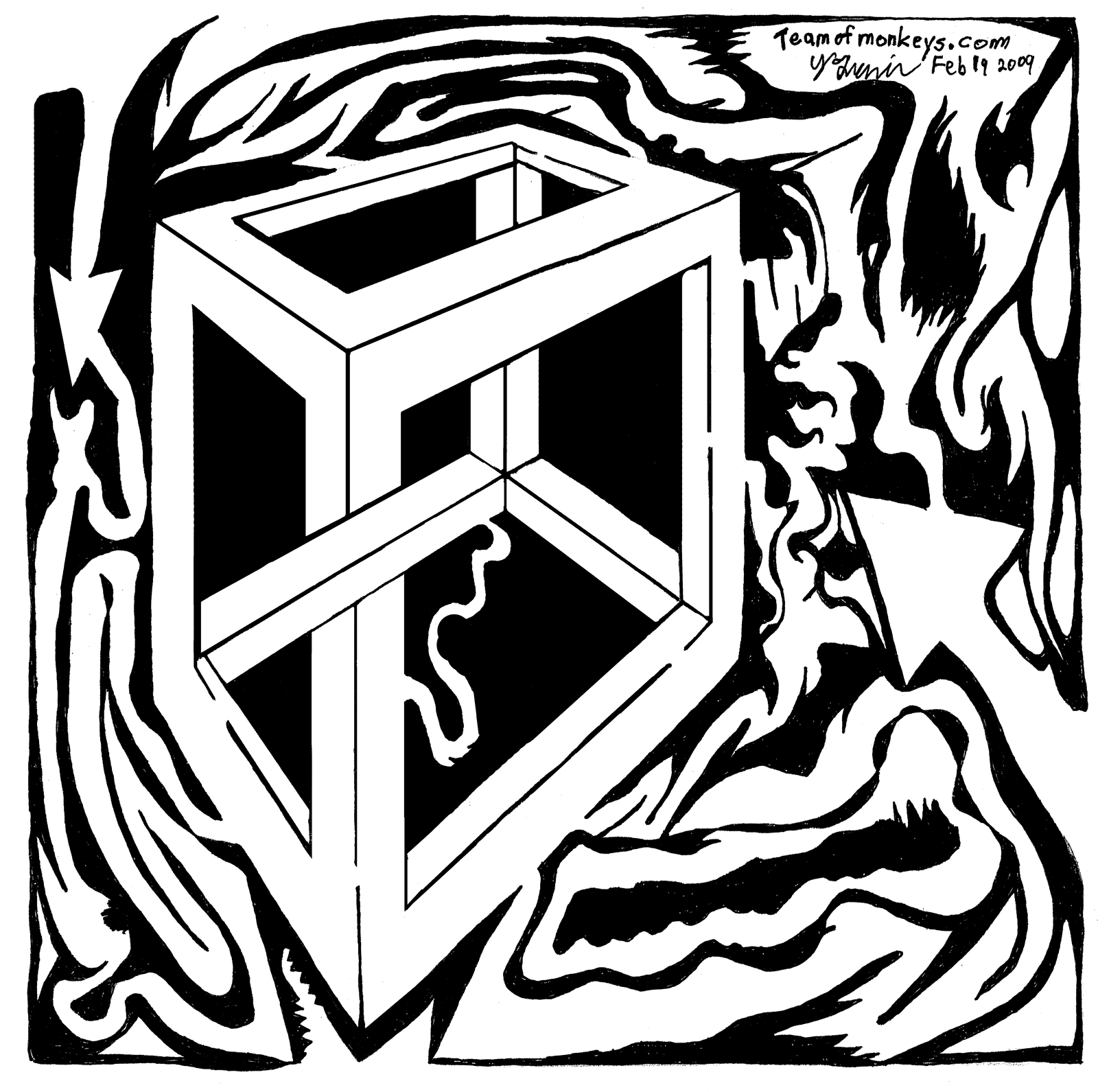
Blivet Maze - Optical illusion maze of an impossible object.
Blivet Maze medium
Blivet Maze - 2009, By Yonatan Frimer


They that mistake life's accessories for life itself are like them that go too fast in a maze: their very haste confuses them

Seneca quotes (Roman philosopher, mid-1st century AD)


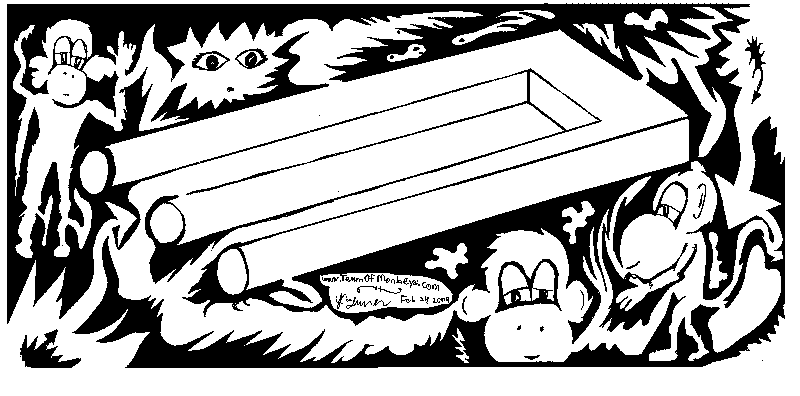
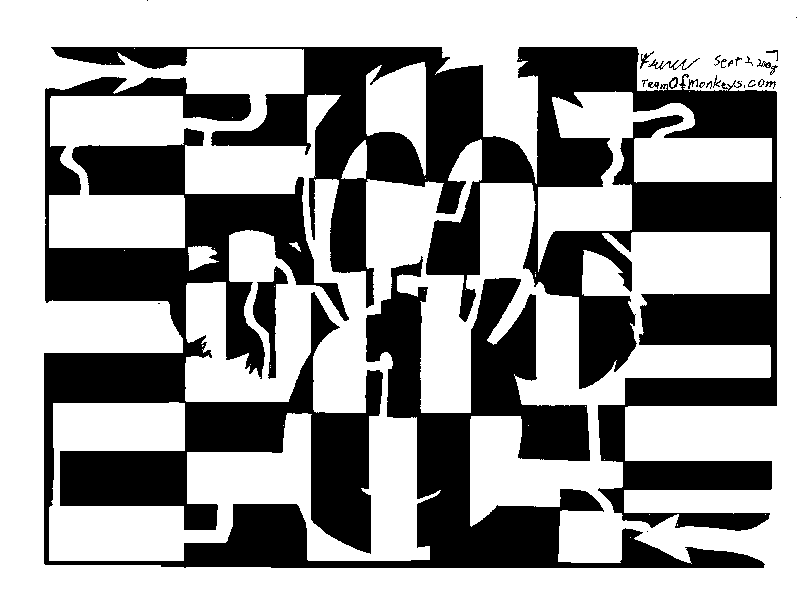
Maze of Monkey Illusion - 2009
Optical illusion maze caused by conflicting horizontal and vertical lines.

maze of monkey illusion medium InkBlotMazes Ink Blot Mazes, By Yonatan Frimer, your humble maze artist
Maze of Monkey Illusion - 2008 - By Yonatan Frimer


“Boris Podolsky: James! How's the rat business?

James Moreland: Well, actually it's mostly students I'm experimenting on now.

Kurt Godel: My God, the mazes must be enormous.

IQ quotes (Movie)


Maze of the Statue of Liberty - 2009
maze of the Statue Of Liberty - InkBlotMazes Ink Blot Mazes, By Yonatan Frimer, your humble maze artist
Maze of Liberty - 2009 - Yonatan Frimer


The man of character, sensitive to the meaning of what he is doing, will know how to discover the ethical paths in the maze of possible behavior.

Earl Warren quotes (American Republican Politician and Judge, 1891-1974)


Barak Obama Maze - 2009

barak obama maze

Maze of Barak Obama - By Yonatan Frimer


Real obstacles don't take you in circles. They can be overcome. Invented ones are like a maze.
Barbara Sher


Maze of 3D Impossible Object - 2009 - By Yonatan Frimer
maze of 3d impossible box
Maze Zen Impossible - Yonatan Frimer 2009


It is easier to penetrate your audience with one sharp, clean point or idea, thand with a maze of half-baked unremarkable, uninspiring ideas that will never motivate or be remembered.

~ Stavros Cosmopulos quotes


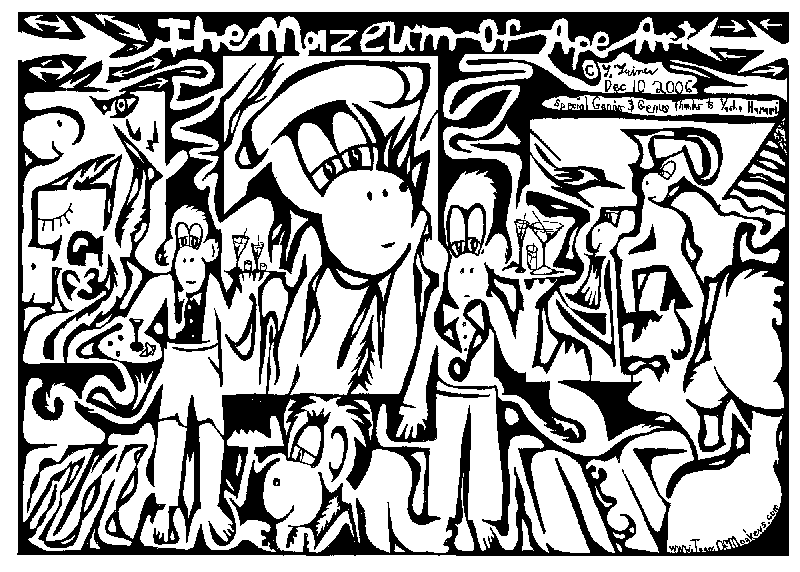
Maze Museum 2006
international maze of a museum
Mazeum, by Yonatan Frimer


Happiness, that grand mistress of the ceremonies in the dance of life, impels us through all its mazes and meanderings, but leads none of us by the same route.

Charles Caleb Colton quotes (English sportsman and writer, 1780-1832)


Maze of Barak Obama, profile view - 2009
barak obama maze by maze of mazes artist yonatan frimer InkBlotMazes Ink Blot Mazes, By Yonatan Frimer, your humble maze artist
Side Portrait Maze of Barak Obama, President


When I was in New York it was like a maze, a rat maze, going from one little box to another little box and passing through passageways to get from one safe haven to another.
Bruce Conner


Maze - Kong 2006
maze of kong InkBlotMazes Ink Blot Mazes, By Yonatan Frimer, your humble maze artist
Maze Kong - By Yonatan Frimer


Life is a maze in which we take the wrong turn before we have learnt to walk

Cyril Connolly quotes (English critic and editor, 1903-1974)


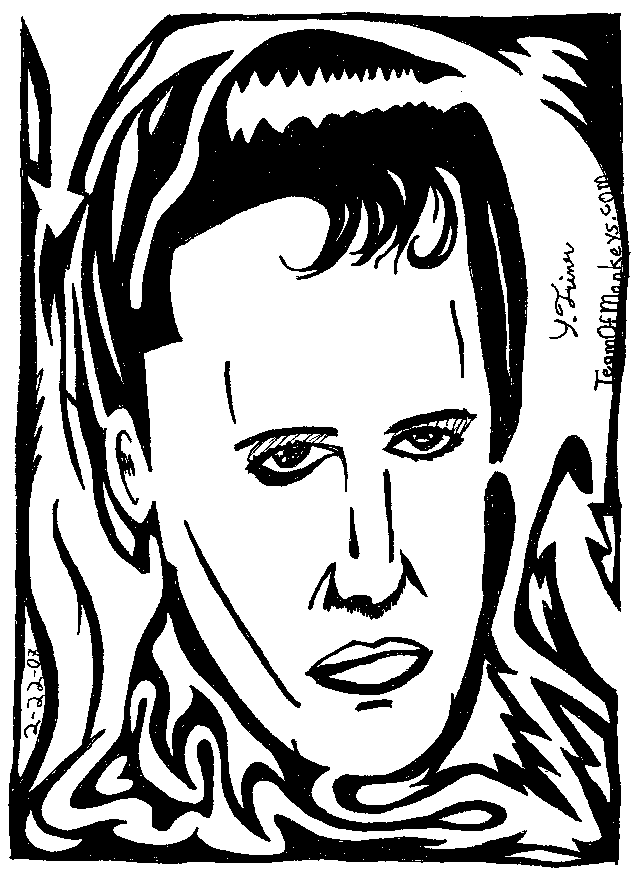
Maze King, of Rock N Roll, Elvis
Elvis Maze InkBlotMazes Ink Blot Mazes, By Yonatan Frimer, your humble maze artist

Elvis Maze - By Yonatan Frimer

"They that mistake life's accessories for life itself are like them that go too fast in a maze: their very haste confuses them."

~ Seneca quotes


Matrix Maze - Keanu Reeves, Neo
Maze of the matrix Neo InkBlotMazes Ink Blot Mazes, By Yonatan Frimer, your humble maze artist
Matrix Maze By Yonatan Frimer


The maze ... was such a mind-altering and life-changing experience. ... My gosh, I mean for something that's pretend it changes your viewpoint on life,

~ John Travolta quotes


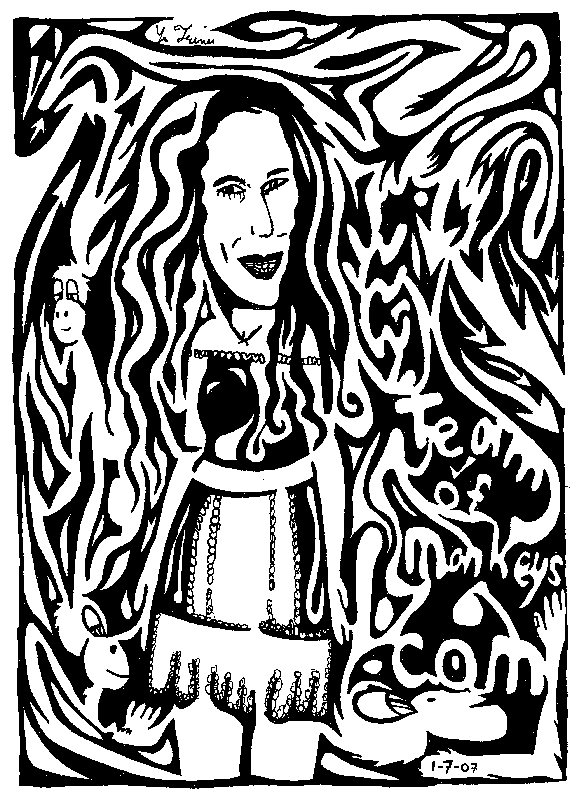
French Maid Maze - 2007

French Made Maze InkBlotMazes Ink Blot Mazes, By Yonatan Frimer, your humble maze artist
Maze Maid in France By Yonatan Frimer


Poem I found on the web about mazes...

Maze Poem
Maze I entered the maze not knowing what I’d find
A world so different within my own
The path was set
But never clear
As I walked along my eyes grew wide
I found so many things I thought I knew
But how different they now appeared
I continued looking for the end
Hopeful that I was getting near
Eventually I reached the end
But by then I realised it was only the beginning.
Magentia


ImagiPlay recalls bead mazes

By Staff -- Playthings,11/20/2008

ImagiPlay Palm Tree Bead MazeWASHINGTON—ImagiPlay is recalling approximately 500 bead maze toys because they pose a potential laceration hazard.

According to the U.S. Consumer Product Safety Commission, the trees on the toys can detach, exposing a metal screw and posing a laceration hazard to young children. No incidents or injuries have been reported involving the toys.

The recalled products are three styles of the Boulder, Colo.-based compay’s wooden Bead Mazes: Apple Tree, Cactus Tree and Palm Tree (pictured). They were sold at toy retailers nationwide from August 2008 through October 2008 for about $13.

The toys were made in the United States.

Consumers are asked to return the recalled toys to the store where purchased for a full refund. For more information, contact ImagiPlay at (800) 882-0217 or online at www.ImagiPLAY.com.

Post a comment Return to article View other article discussions


Submitted by: Brian Peterson (brian_d_peterson@iotatoys.com)
2/24/2009 9:33:48 PM PT

A business coach once explained to me that one measure of integrity was one's ability to follow-through on their promises. And by exhibiting such integrity, trust will follow. Yet, can you imagine a business whose tagline commits themselves to integrity? That is what ImagiPLAY has done with their tagline "Toys with Integrity". The ImagiPLAY home page contains a product recall link at the top center of their page. The recall was self imposed by ImagiPLAY based on one incident which did not lead to an injury. They apparently do not turn a blind eye to product safety concerns, but rather follow through on their commitment to quality and safety of toys. Having visited the ImagiPLAY home page and paying attention to its product recall link, I could not help but to be inspired and intrigued by a company who's mantra focuses on integrity and whose actions support that mantra. If Barbera Aimes were to offer a business integrity workshop, there are many businesses who could truly benefit from her example.


York Maze owner Tom Pearcy seeks flexible opening hours

8:20am Thursday 26th February 2009

comment Comments (2) Have your say »


ONE of York’s newest tourist attractions is looking to shake up the times it is allowed to open – to secure its future in the face of North Yorkshire’s soggy summers.

The owners of the York Maze, near Elvington, have applied for permission to welcome visitors and stage events at different periods throughout the year, rather than being restricted to throwing open its fields from July to September.

Currently, the site – which moved to its present home after being forced to move from its original location next to the Grimston Bar park & ride to make way for the University of York’s Heslington East expansion – can only open for 13 weeks a year, with extra events requiring special dispensation.

And although Maze owner Tom Pearcy does not want to extend those opening limits, he is asking City of York Council to give the go-ahead to his suggestion that the attraction, which employs three full-time staff and around 30 seasonal workers and drew 50,000 visitors last year, should operate more flexibly.

He believes it would allow more room for manoeuvre following the huge debut fireworks display last November, which attracted 2,500 people and filled the void left by the lack of a civic Bonfire Night event in York. In a statement to the council, Mr Pearcy said: “York Maze is the country’s leading maze attraction – it is the largest and most visited maize maze in the UK and a vibrant and important part of the city’s tourist economy.

“The new site we are operating from has a much higher level of fixed costs than the old site. The two recent wet summers have given me concerns over the future viability of the business while depending on an eight-week opening window.

“Allowing the maze more flexibility would spread the fixed costs of the current operation and hopefully ensure the financial future of the business.

“Many of the other leading maize mazes across the world are having a great deal of success by opening for short periods during other seasons.

“Following the success of the York Maze Fireworks Spectacular, I would like the flexibility to open the site for such seasonal events which fall outside my current permission, as well as allowing the site to be used for private hire on occasions.”

Mr Pearcy said he was not asking to extend the 13-week opening limit, but would consider opening the Maze for eight weeks during summer and two or three weeks over Hallowe’en, leaving the remainder for “other possible uses, such as a Christmas event”.

He said: “I am not seeking to open the year round and it is not anticipated that daily visitor numbers would exceed those already experienced during the summer maze.”

The maze application is expected to go before the council’s planning committee in mid-April.


Your Say YourPress

Smiler, York says...
2:40pm Thu 26 Feb 09

Sounds like a good business plan to me, Why not extend the openeing to 20 weeks? 13 weeks in the summer and seven weeks elsewhere.


why not have it open 365 days of the year and dump the chavs there at dusk?


York Maze owner Tom Pearcy, who wants to stage events at different times during the year

Labels: , , , ,

Friday, February 27, 2009

How Wind Turbines Work...

How wind turbines work


Wind turbines offer part of the solution to the world's renewable energy sourced electricity needs, and in some countries currently represents over 10% of the electricity supply.

This percentage will no doubt increase in the years ahead and the sight of wind turbines scattered across landscapes will become an increasingly common occurrence. It's all a part of the battle to reduce global warming induced climate change and to reduce our reliance on fossil fuels.

While we're likely most familiar with the huge turbines that crank out electricity for hundreds or thousands of residences, there are now many smaller options available for residential use.

Wind and solar energy connection

It's important to understand that wind is actually a form of solar energy - so by saying that a wind turbine harnesses solar power isn't totally incorrect. Wind is a phenomenon that occurs caused by the uneven heating of the Earth's surface in combination with the spinning of the planet on its axis.

Turbine design

A wind turbine, instead of operating like a fan in your home that uses electricity to create wind, uses wind to create electricity. The blades of the turbine are shaped in such a way that wind causes them to rotate, which spins a low speed shaft with a gear at the end which is connected to another smaller gear on a high speed shaft that runs through a generator housing.

The generator creates electricity using much the same principle as the alternator on your car (depending on the turbine type). A magnetic rotor on the high speed shaft inside the generator housing spins inside loops of copper wire that are wound around an iron core. As the rotor spins around the inside of the core it creates "electromagnetic induction" through the coils that generates an electrical current. That current is then regulated and fed into the grid (or a residential grid connect system) after some modification so that it can be used in our homes or routed into a battery bank for storage. Where a battery bank is used, a regulator prevents overcharging.

The most common wind turbine is the horizontal-axis, which looks somewhat like a traditional windmill, but there are also vertical-axis designs that look similar to an egg-beater or paddle wheel laid on its side.

Wind farm
horizontal axis wind turbine farm - large scale electricity production

Horizontal and Vertical Axis Wind Turbines
Horizontal and vertical axis wind turbine models for home use
Image courtesy Energy Matters Australia - Wind Turbine Specialists

In the horizontal-axis type, a yaw mechanism in the turbine shaft is utilized to turn the wind turbine rotor into the wind, increasing efficiency. In most cases with wind farm turbines, this is a powered by a small electric motor and computer monitoring.

Turbine size and output

Wind turbines for commercial electricity production usual range from 100 kilowatts to 5 megawatts. At the time of writing, the largest wind turbine in the world had a rotor diameter of 126 m (390 feet) and the potential to generate enough electricity for 5000 households.

A wind turbine for home use has rotors between 8 and 25 feet in diameter and usually has the potential to generate between a few hundred watts and 6 kilowatts of electricity. Some wind turbines can be used in conjunction with a grid connect system.

For every kilowatt hour of electricity produced by wind energy or other green means, approximately 1.5 pounds of carbon is prevented from going into the atmosphere if that electricity had been sourced from coal fired power plants. Carbon dioxide is a major contributor to global warming induced climate change.

Wind speeds needed

A wind turbine usually needs wind speeds of around 10 miles an hour (16kmh) to start generating electricity and optimum wind speed for large turbines is approximately 30 miles per hour ; so they aren't really an option if you're located in an area where winds are usually light and variable, although some models are now being produced that can generate electricity with as little as 5 mile per hour wind speeds - particularly vertical axis models.

Wind speed usually increases with height and where there are no natural or man-made obstructions and this why you'll often see them on hilltops or perhaps in the middle of wheat fields. The wind energy industry has been a boon for many farmers as they can still crop their land with little interference and also generate an income from allowing the turbines on their property. Increasing numbers of wind farms are also being erected offshore.

The blades of a wind turbine rotate at a rate of between 10 to 50 revolutions per minute. In a situation where wind speeds are excessive, for example if there's a gale, the turbine automatically shuts down to prevent damage.

Turbine lifespan

The lifespan of a modern turbine is pegged at around 120 000 hours or 20-25 years, but they aren't totally maintenance free. As they contain moving components, some parts will need to be replaced during their working life. From what I've researched, the cost of maintenance and parts replacement is around the 1 cent USD/ AU per kWh or 1.5 to 2 per cent annually of the original turbine cost.

Environmental impact

Wind turbines aren't overly noisy - mechanical noise is minimum these days and you'll mostly hear the swoosh of the blades passing the tower. Of course, if you're living close to a large wind farm, it could present some noise issues; but most countries have regulations regarding the placement of wind farms in relation to residential areas.

Wind turbines are created from fiberglass, plastics, aluminium, copper, steel and various other metals, so they do have an impact on the environment in that respect and there's also the energy used to to manufacture the turbine. Many turbine parts are recyclable and it's my understanding the amount of energy used in manufacture is balanced out within six to eight months after being commissioned.

Wind farms do have an impact on birds - there have been recorded cases of birds being killed by rotor blades when they fly into them; but there's a great deal of research being carried out to try and minimize the problem. It's also an issue taken into consideration in most countries when choosing a location for a wind farm in relation to bird migratory patterns.

Costs and regulation for residential turbines

Turbines used in residential situations are much quieter than their wind farm counterparts, but you'll need to check with your local authorities as they are still not permitted in some areas - this being the case, your best options for renewable energy is solar power. If you do meet resistance with your local council, talk to them about vertical turbine options as these emit lower noise, have a lower profile and are considered to be generally more aesthetically pleasing than their horizontal axis counterparts. As local government tends to be behind the times with technological developments in renewable energy, it doesn't hurt to raise the possibility of that alternative.

Wind turbines for home use vary in price and greatly depend on your electricity needs vs. wind availability, but you can expect to pay around $12,000 to cater for the average home. However, bear in mind that cost can be greatly offset by renewable energy rebates offered by many governments.

Many people think that wind turbines are ugly, and I tend to agree; but I feel that way about most things man made that are added to a natural landscape. Aesthetics aside, the other point that people should bear in mind that if we want to maintain the level of comfort we've grown accustomed to in our modern lives, there will always be some sort of price to pay beyond dollars and cents.

If I had to choose between living close by to a wind farm or a coal fired electricity generation plant, I'd certainly opt for the wind farm and I'd definitely consider a residential model turbine if wind was a reliable factor in my area - there's nothing quite like the feeling of gaining independence through your own electricity generation :).


Labels: , , , , , , , , , , , ,

How Wind Turbines Work...

How wind turbines work


Wind turbines offer part of the solution to the world's renewable energy sourced electricity needs, and in some countries currently represents over 10% of the electricity supply.

This percentage will no doubt increase in the years ahead and the sight of wind turbines scattered across landscapes will become an increasingly common occurrence. It's all a part of the battle to reduce global warming induced climate change and to reduce our reliance on fossil fuels.

While we're likely most familiar with the huge turbines that crank out electricity for hundreds or thousands of residences, there are now many smaller options available for residential use.

Wind and solar energy connection

It's important to understand that wind is actually a form of solar energy - so by saying that a wind turbine harnesses solar power isn't totally incorrect. Wind is a phenomenon that occurs caused by the uneven heating of the Earth's surface in combination with the spinning of the planet on its axis.

Turbine design

A wind turbine, instead of operating like a fan in your home that uses electricity to create wind, uses wind to create electricity. The blades of the turbine are shaped in such a way that wind causes them to rotate, which spins a low speed shaft with a gear at the end which is connected to another smaller gear on a high speed shaft that runs through a generator housing.

The generator creates electricity using much the same principle as the alternator on your car (depending on the turbine type). A magnetic rotor on the high speed shaft inside the generator housing spins inside loops of copper wire that are wound around an iron core. As the rotor spins around the inside of the core it creates "electromagnetic induction" through the coils that generates an electrical current. That current is then regulated and fed into the grid (or a residential grid connect system) after some modification so that it can be used in our homes or routed into a battery bank for storage. Where a battery bank is used, a regulator prevents overcharging.

The most common wind turbine is the horizontal-axis, which looks somewhat like a traditional windmill, but there are also vertical-axis designs that look similar to an egg-beater or paddle wheel laid on its side.

Wind farm
horizontal axis wind turbine farm - large scale electricity production

Horizontal and Vertical Axis Wind Turbines
Horizontal and vertical axis wind turbine models for home use
Image courtesy Energy Matters Australia - Wind Turbine Specialists

In the horizontal-axis type, a yaw mechanism in the turbine shaft is utilized to turn the wind turbine rotor into the wind, increasing efficiency. In most cases with wind farm turbines, this is a powered by a small electric motor and computer monitoring.

Turbine size and output

Wind turbines for commercial electricity production usual range from 100 kilowatts to 5 megawatts. At the time of writing, the largest wind turbine in the world had a rotor diameter of 126 m (390 feet) and the potential to generate enough electricity for 5000 households.

A wind turbine for home use has rotors between 8 and 25 feet in diameter and usually has the potential to generate between a few hundred watts and 6 kilowatts of electricity. Some wind turbines can be used in conjunction with a grid connect system.

For every kilowatt hour of electricity produced by wind energy or other green means, approximately 1.5 pounds of carbon is prevented from going into the atmosphere if that electricity had been sourced from coal fired power plants. Carbon dioxide is a major contributor to global warming induced climate change.

Wind speeds needed

A wind turbine usually needs wind speeds of around 10 miles an hour (16kmh) to start generating electricity and optimum wind speed for large turbines is approximately 30 miles per hour ; so they aren't really an option if you're located in an area where winds are usually light and variable, although some models are now being produced that can generate electricity with as little as 5 mile per hour wind speeds - particularly vertical axis models.

Wind speed usually increases with height and where there are no natural or man-made obstructions and this why you'll often see them on hilltops or perhaps in the middle of wheat fields. The wind energy industry has been a boon for many farmers as they can still crop their land with little interference and also generate an income from allowing the turbines on their property. Increasing numbers of wind farms are also being erected offshore.

The blades of a wind turbine rotate at a rate of between 10 to 50 revolutions per minute. In a situation where wind speeds are excessive, for example if there's a gale, the turbine automatically shuts down to prevent damage.

Turbine lifespan

The lifespan of a modern turbine is pegged at around 120 000 hours or 20-25 years, but they aren't totally maintenance free. As they contain moving components, some parts will need to be replaced during their working life. From what I've researched, the cost of maintenance and parts replacement is around the 1 cent USD/ AU per kWh or 1.5 to 2 per cent annually of the original turbine cost.

Environmental impact

Wind turbines aren't overly noisy - mechanical noise is minimum these days and you'll mostly hear the swoosh of the blades passing the tower. Of course, if you're living close to a large wind farm, it could present some noise issues; but most countries have regulations regarding the placement of wind farms in relation to residential areas.

Wind turbines are created from fiberglass, plastics, aluminium, copper, steel and various other metals, so they do have an impact on the environment in that respect and there's also the energy used to to manufacture the turbine. Many turbine parts are recyclable and it's my understanding the amount of energy used in manufacture is balanced out within six to eight months after being commissioned.

Wind farms do have an impact on birds - there have been recorded cases of birds being killed by rotor blades when they fly into them; but there's a great deal of research being carried out to try and minimize the problem. It's also an issue taken into consideration in most countries when choosing a location for a wind farm in relation to bird migratory patterns.

Costs and regulation for residential turbines

Turbines used in residential situations are much quieter than their wind farm counterparts, but you'll need to check with your local authorities as they are still not permitted in some areas - this being the case, your best options for renewable energy is solar power. If you do meet resistance with your local council, talk to them about vertical turbine options as these emit lower noise, have a lower profile and are considered to be generally more aesthetically pleasing than their horizontal axis counterparts. As local government tends to be behind the times with technological developments in renewable energy, it doesn't hurt to raise the possibility of that alternative.

Wind turbines for home use vary in price and greatly depend on your electricity needs vs. wind availability, but you can expect to pay around $12,000 to cater for the average home. However, bear in mind that cost can be greatly offset by renewable energy rebates offered by many governments.

Many people think that wind turbines are ugly, and I tend to agree; but I feel that way about most things man made that are added to a natural landscape. Aesthetics aside, the other point that people should bear in mind that if we want to maintain the level of comfort we've grown accustomed to in our modern lives, there will always be some sort of price to pay beyond dollars and cents.

If I had to choose between living close by to a wind farm or a coal fired electricity generation plant, I'd certainly opt for the wind farm and I'd definitely consider a residential model turbine if wind was a reliable factor in my area - there's nothing quite like the feeling of gaining independence through your own electricity generation :).


Labels: , , , , , , , , , , , ,

Tuesday, February 17, 2009

Sniper Maze of a monkey


Maze
of Mazes


mazes picture for close up maze of eyes


<<Previous
Maze<<
Page 2
>>Next
Maze>>


Have a look at our maze collection. Enjoy.


Sniper Monkey - Maze by
Yonatan Frimer


sniper maze 001

Please contact
the maze artist
if you'd like to use any of these mazes in your
publication or paper.


Maze Blog


Y.Frimer
Maze in the Chinese Newspaper, The Information Times


Labels: , , , , , , ,

Mazes by same artist as Team Of Monkeys?


Sniper Maze


Monkey Maze Optical Illusion


Monkey Maze Close Up


Mazes of Monkeys Eyes and others
Created By Yonatan Frimer yfrimer @ yahoo.com
TeamOfMonkeys
Maze of Mazes

Labels: , , , , , ,